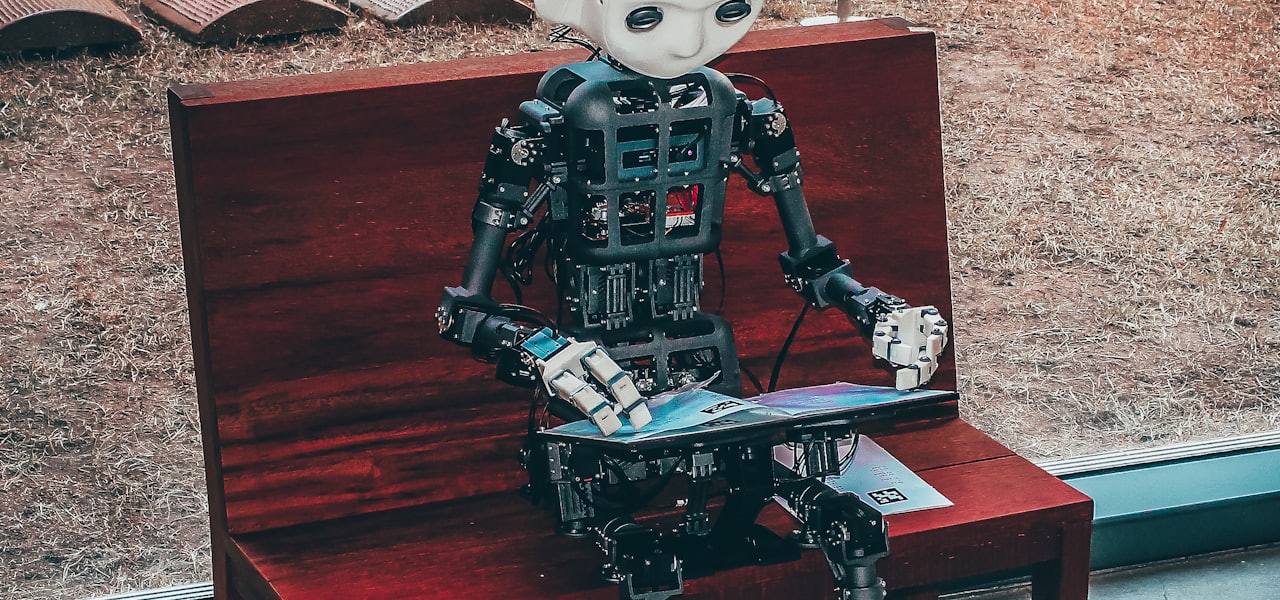
Shopping for the best AI presentation maker? An AI presentation maker is software that uses machine learning to help you get more done — it keeps getting smarter as the underlying models improve. Pricing, accuracy, and the size of the model behind the tool are the three factors that most affect daily usefulness. Whether you are a beginner or a pro, the right AI presentation maker slots into your workflow and pays for itself fast. Below we compare features, pricing, and real output so you can choose with confidence.
AI-assisted software development
AI-assisted software development is the use of artificial intelligence (AI) to augment software development. It uses large language models (LLMs), AI agents and other AI technologies to assist software developers. It helps in a range of tasks of the software development life cycle, from code generation to debugging, editing, testing, UI design, understanding the code, and documentation. Agentic coding denotes the use of AI agents for software development. == Technologies == === Source code generation === Large language models trained or fine-tuned on source-code corpora can generate source code from natural-language descriptions, comments, or docstrings. Research on code-generation systems often evaluates generated programs by functional correctness, such as whether the output passes automated test cases, rather than by syntax alone. Such tools can be features or extensions of integrated development environments (IDEs). === Intelligent code completion === AI agents using pre-trained and fine-tuned LLMs can predict and suggest code completions based on context. According to Husein, Aburajouh & Catal in a 2025 literature review in Computer Standards & Interfaces, "LLMs significantly enhance code completion performance across several programming languages and contexts, and their capability to predict relevant code snippets based on context and partial input boosts developer productivity substantially." === Testing, debugging, code review and analysis === AI is used to automatically generate test cases, identify potential bugs and security vulnerabilities, and suggest fixes. AI can also be used to perform static code analysis and suggest potential performance improvements. == Limitations == Both ownership of and responsibility for AI-generated code is disputed. According to a report from the German Federal Office for Information Security, the use of AI coding assistants without careful oversight from experienced developers can introduce both minor and major security vulnerabilities, and any potential gain in productivity should be weighed against the cost of additional quality control and security measures. According to Deloitte, outputs from AI-assisted software development must be validated through a combination of automated testing, static analysis tools and human review, creating a governance layer to improve quality and accountability. == Vibe coding ==
Xaitment
xaitment is a German-based company that develops and sells artificial intelligence (AI) software to video game developers and simulation developers. The company was founded in 2004 by Dr. Andreas Gerber, and is a spin-off of the German Research Centre for Artificial Intelligence, or DFKI. xaitment has its main office in Quierschied, Germany, and field offices in San Francisco and China. == Products == xaitment currently sells two AI software modules: xaitMap and xaitControl. xaitMap provides runtime libraries and graphical tools for navigation mesh generation (also called NavMesh generation), pathfinding, dynamic collision avoidance, and individual and crowd movement. xaitControl is a finite-state machine for game logic and character behavior modeling that also includes a real-time debugger. On January 11, 2012, xaitment announced that it making its source code for these modules available to "all current and future US and European licensees". On February 22, 2012 xaitment released two new plug-ins, xaitMap and xaitControl for the Unity Game Engine. The full versions are available for PC (Windows and Linux), PlayStation 3, Xbox 360 and Wii. The pathfinding plug-in is available with a Windows dev environment, but can deployed on iOS, Mac, Android and the Unity Web Player. == Partners == xaitment's AI software is currently integrated into the Unity game engine, Havok's Vision Engine, Bohemia Interactive's VBS2 Simulation Engine, GameBase's Gamebryo game engine. == Customers == xaitment sells its AI software products to video game developers and military and civil simulation developers. Current customers include Tencent, gamania, TML Studios, Emobi Games, IP Keys and others. A full list of customers can be found on xaitment's website.
Computer-assisted legal research
Computer-assisted legal research (CALR) or computer-based legal research is a mode of legal research that uses databases of court opinions, statutes, court documents, and secondary material. Electronic databases make large bodies of case law easily available. Databases also have additional benefits, such as Boolean searches, evaluating case authority, organizing cases by topic, and providing links to cited material. Databases are available through paid subscription or for free. Subscription-based services include Westlaw, LexisNexis, JustCite, HeinOnline, Bloomberg Law, Lex Intell, VLex and LexEur. As of 2015, the commercial market grossed $8 billion. Free services include OpenJurist, Google Scholar, AltLaw, Ravel Law, WIPO Lex, Law Delta and the databases of the Free Access to Law Movement. == Purposes == Computer-assisted legal research is undertaken by a variety of actors. It is taught as a topic in many law degrees and is used extensively by undergraduate and postgraduate law students in meeting the work requirements of their degree courses. Professors of Law rely on the digitization of primary and secondary sources of law when conducting their research and writing the material that they submit for publication. Professional lawyers rely on computer-assisted legal research in order to properly understand the status of the law and so to act effectively in the best interest of their client. They may also consult the text of case judgements and statutes specifically, as well as wider academic comment, in order to form the basis of (or response to) an appeal. The availability of legal information online differs by type, jurisdiction and subject matter. The types of information available include: Texts of statutes, statutory instruments, civil codes, etc. Explanatory notes and government publications relating to statutes and their operation Texts of governing documents such as constitutions and treaties Case judgements Journals on legal matters or legal theory Dictionaries and legal encyclopedia Legal texts and materials in the form of e-books Current affairs and market information Educational information on the law and its operation == Before the Internet == Prior to the advent and popularization of the World Wide Web, access to digital legal information was largely through the use of CD-ROMs, designed and sold by commercial organizations. Dial-up services were also available from the 1970s. As the use of the Internet spread in the early 1990s, companies such as LexisNexis and Westlaw incorporated Internet connectivity into their software packages. Browser-based legal information started to be published by Legal Information Institutes from 1992. == Publicly available information == The first effort to provide free computer access to legal information was made by two academics, Peter Martin and Tom Bruce, in 1992. Today, the Legal Information Institute freely publishes such resources as the text of the United States Constitution, judgements of the United States Supreme Court, and the text of the United States Code. The Australasian Legal Information Institute (AusLII) was established soon after in 1995. Other legal information institutes, such as those of Great Britain and Ireland (BAILII), Canada (CII) and South Africa (SAfLI) soon followed. LIIs were partially formalized in 2002 following the signing of the Declaration of Free Access to the Law, which has been signed by 54 countries. At the time of writing, the World Legal Information Institute contains in excess of 1800 databases from 123 jurisdictions. Many governments also publish legal information online. For example, UK legislation and statutory instruments have been publicly available online since 2010. Depending on the jurisdiction in question, the decisions of higher appellate courts may also be published online, either by the Legal Information Institute or by the court service directly. Sources of European Union Law are published for free by EUR-Lex in 23 languages, including judgments of the European Courts. Similarly, judgements of the European Court of Human Rights are published on its website.
SpreeAI
SpreeAI (stylized as SPREEAI) is an American fashion technology company headquartered in Incline Village, Nevada that develops artificial intelligence software for the apparel and retail industries, including photorealistic virtual try-on, AI-powered sizing recommendations, and digital model generation. Founded in 2022 by John Imah and Bob Davidson, the company achieved unicorn status in 2025 following a Series B round led by Davidson Group that valued the company at approximately US$1.5 billion. TechCrunch identified SpreeAI as one of the more than 100 new tech unicorns minted in 2025. Its board of directors includes supermodel Naomi Campbell and hospitality executive Larry Ruvo. == History == SpreeAI was founded in 2022 by John Imah and Bob Davidson with a focus on artificial intelligence applications in fashion retail. By 2024, the company had raised approximately US$60 million in venture funding. In May 2025, SpreeAI announced a Series B round led by Davidson Group; reporting at the time placed the company's valuation at approximately US$1.5 billion, making it one of a small number of fashion-technology companies to reach unicorn status. In January 2026, TechCrunch listed SpreeAI among the more than 100 new tech unicorns minted in 2025. == Technology == SpreeAI develops a suite of artificial intelligence tools for the apparel industry. Its consumer-facing platform allows shoppers to upload a single photograph or select a digital model and then visualize clothing items on that figure with photorealistic rendering, while a complementary sizing engine generates fit recommendations intended to reduce returns. The platform is designed for integration with online retailers so that shoppers can preview garments before purchase. The company has stated that its models were developed in part through research collaborations with the Massachusetts Institute of Technology and Carnegie Mellon University. == Leadership and board == John Imah, a Nigerian-American technology executive who previously held roles at Samsung, Twitch, Meta Platforms, and Snap Inc., is co-founder and chief executive officer. Co-founder Bob Davidson, through Davidson Group, led the company's Series B financing. The company's board of directors includes supermodel Naomi Campbell, who joined in 2024, and Las Vegas hospitality executive Larry Ruvo. == Partnerships == SpreeAI has formed partnerships across both academia and the fashion industry. Council of Fashion Designers of America (CFDA). In 2025, SpreeAI entered a partnership with the CFDA to support American designers and brands with AI-driven tools; the CFDA described SpreeAI as "a fashion technology leader delivering innovative solutions to help designers and brands thrive." Massachusetts Institute of Technology and Carnegie Mellon University. The company has cited ongoing research and talent collaborations with both institutions. Sergio Hudson and Kai Collective. In 2025, SpreeAI made what WWD described as its Met Gala debut through a custom collaboration with designer Sergio Hudson and Nigerian-British label Kai Collective; the collaboration paired Hudson's couture with SpreeAI's virtual try-on platform. == Recognition == In 2025, TechCrunch named SpreeAI among the new tech unicorns of the year. In 2025, SpreeAI was named an honoree in Inc.'s Best in Business awards, and CEO John Imah was included on Inc.'s list of 40 business leaders who "propelled their organizations to success." In 2025, Imah was named to the Observer's AI Power Index, a list of 100 leaders shaping the future of artificial intelligence. In 2025, Imah was included in AfroTech's Future 50, recognizing Black innovators in technology. SpreeAI and Imah have been the subject of profile coverage in The Washington Post, Rolling Stone UK, WWD, Vogue UA, L'Officiel Arabia, GQ South Africa, and Inc..
Smart environment
Smart environments link computers and other smart devices to everyday settings and tasks. Smart environments include smart homes, smart cities, and smart manufacturing. == Introduction == Smart environments are an extension of pervasive computing. According to Mark Weiser, pervasive computing promotes the idea of a world that is connected to sensors and computers. These sensors and computers are integrated with everyday objects in peoples' lives and are connected through networks. == Definition == Cook and Das, define a smart environment as "a small world where different kinds of smart devices are continuously working to make inhabitants' lives more comfortable." Smart environments aim to satisfy the experience of individuals from every environment, by replacing hazardous work, physical labor, and repetitive tasks with automated agents. Poslad differentiates three different kinds of smart environments for systems, services, and devices: virtual (or distributed) computing environments, physical environments, and human environments, or a hybrid combination of these: Virtual computing environments enable smart devices to access pertinent services anywhere and anytime. Physical environments may be embedded with various smart devices of different types including tags, sensors, and controllers, and have different form factors ranging from nano- to micro- to macro-sized. Human environments: humans, either individually or collectively, inherently form a smart environment for devices. However, humans themselves may be accompanied by smart devices such as mobile phones, use surface-mounted devices (wearable computing), and contain embedded devices (e.g., pacemakers to maintain a healthy heart operation or AR contact lenses) == Features == Smart environments encompass a range of features and services across various domains, including smart homes, smart cities, smart health, and smart factories. Some of the key features of smart environments are: Sensors and Actuators: Smart environments are equipped with an assembly of sensors and actuators that collect data and initiate actions to provide services for the betterment of human life. Interconnected Systems: These environments consist of interconnected systems that enable seamless communication and coordination among various devices and components. Data-Driven Technologies: Smart environments leverage data-driven technologies, such as the Internet of Things (IoT), to obtain information from the physical world, process it, and perform actions accordingly. Efficiency and Sustainability: They are designed to improve efficiency, sustainable practices, and resource management across different settings, such as energy efficiency in smart homes and environmental quality management in smart cities. Diverse Requirements: Different types of smart environments have diverse requirements and technology choices, influencing the processing and utilization of data within a specific environment. == Technologies == Building a smart environment involves technologies of Wireless communication Algorithm design, signal prediction & classification, information theory Multilayered software architecture, Corba, middleware Speech recognition Image processing, image recognition Sensors design, calibration, motion detection, temperature, pressure sensors, accelerometers Semantic Web and knowledge graphs Adaptive control, Kalman filters Computer networking Parallel processing Operating systems == Existing projects == The Aware Home Research Initiative at Georgia Tech "is devoted to the multidisciplinary exploration of emerging technologies and services based in the home" and was launched in 1998 as one of the first "living laboratories." The Mav Home (Managing an Adaptive Versatile Home) project, at UT Arlington, is a smart environment-lab with state-of-the-art algorithms and protocols used to provide a customized, personal environment to the users of this space. The Mav Home project, in addition to providing a safe environment, wants to reduce the energy consumption of the inhabitants. Other projects include House at the MIT Media Lab and many others.
Interim Measures for the Management of Generative AI Services
The Interim Measures for the Management of Generative AI Services (Chinese: 生成式人工智能服务管理暂行办法; pinyin: Shēngchéng shì réngōng zhìnéng fúwù guǎnlǐ zànxíng bànfǎ) are a set of regulations governing public-facing generative artificial intelligence services in China. Issued on 10 July 2023 and effective from 15 August 2023, they were China's first binding regulation specifically targeting generative AI. They have been described as among the earliest such regulations adopted by any country. The measures were jointly issued by the Cyberspace Administration of China (CAC) and six other national bodies: the National Development and Reform Commission, the Ministry of Education, the Ministry of Science and Technology, the Ministry of Industry and Information Technology, the Ministry of Public Security, and the National Radio and Television Administration. Among the measures' most prominent requirements is that generative AI services must uphold Core Socialist Values and must not generate content that could subvert state power, harm national security, or undermine social stability. The measures also require providers of public-facing generative AI services to undergo security assessments and register their algorithms with the CAC. As of December 2025, 748 generative AI services had completed the filing process at the national level. == Background == The Interim Measures build on two earlier sets of regulations targeting specific algorithm applications. The Administrative Provisions on Algorithm Recommendation for Internet Information Services, effective from March 2022, established China's algorithm registry and required providers of recommendation algorithms with "public opinion properties or social mobilization capabilities" to file with the CAC and undergo security assessments. The Administrative Provisions on Deep Synthesis of Internet Information Services, effective from January 2023, extended similar requirements to algorithms used for generating synthetic media such as deepfakes. In April 2023, the CAC released a draft of the generative AI regulation for public comment. The draft included several requirements that attracted attention, including that generated content should "embody Core Socialist Values" and that training data should be "true and accurate". The public consultation period ran until May 2023. The final version, published in July 2023, was substantially revised from the draft. According to an analysis by the Future of Privacy Forum, changes appeared to reflect feedback from industry stakeholders including Baidu, Xiaomi, SenseTime, and others, as well as input from government-affiliated research institutes. The final measures adopted a more permissive tone, with the CAC describing its approach as "inclusive and prudent" (包容审慎) and emphasising "classified and graded" (分类分级) supervision. == Scope == The measures apply to services that use generative AI technology to provide text, images, audio, video, or other content to the public within mainland China (Article 2). They do not apply to organisations that develop or use generative AI internally without offering services to the domestic public, such as industry associations, enterprises, and research institutions. Overseas providers whose services are accessible to users in China are also subject to the measures. == Key provisions == === Content requirements === Article 4 sets out the core content obligations. Providers and users of generative AI services must uphold the Core Socialist Values. The measures prohibit generating content that incites subversion of national sovereignty or the socialist system, endangers national security or the nation's image, incites separatism, promotes terrorism or extremism, promotes ethnic hatred or discrimination, or contains violence, obscenity, or false information prohibited by law. These content prohibitions largely mirror those in Article 12 of the Cybersecurity Law and in prior regulations governing online content. Article 4 also requires that models be designed and trained to avoid discrimination, that services respect intellectual property rights, and that providers take effective measures to improve the transparency and accuracy of generated content. === Training data and labelling === Article 7 requires providers to ensure that training data is of high quality and legitimately sourced, and that it does not infringe upon intellectual property rights. Where personal information is used, consent must be obtained. The final version of this provision removed language from the draft that would have held providers responsible for the "legitimacy" of all pretraining data, replacing it with a requirement to "employ effective measures to improve the quality of training data". Article 8 requires providers to establish labelling rules for training data and to conduct quality assessments of data annotations. Article 12 requires that generated images, videos, and other synthetic content be labelled as AI-generated. === User rights and privacy === Article 11 requires providers to protect user privacy, to minimise the collection and retention of personal data, and to refrain from unlawfully sharing user information. Users have the right to request review, correction, or deletion of their personal information. Article 10 requires providers to take measures to prevent excessive dependence on or addiction to generative AI services by minors. === Security assessment and algorithm filing === Article 17 requires that providers of generative AI services with "public opinion properties or the capacity for social mobilization" (具有舆论属性或者社会动员能力) carry out security assessments and complete algorithm filing procedures in accordance with the Administrative Provisions on Algorithm Recommendation for Internet Information Services. == Implementation == === Algorithm filing process === In practice, the filing requirements under the Interim Measures have developed into a two-tier process. The first tier is the standard algorithm filing (算法备案) under the pre-existing Algorithm Recommendation Provisions, which involves submitting information about an algorithm's design, purpose, and data sources to the CAC. This process is primarily a registration mechanism. For public-facing generative AI products, there is an additional, more rigorous process commonly referred to as the "large model filing" (大模型备案). This involves submitting a security self-assessment report, data annotation rules, a keyword blocking list, and evaluation test question sets. The process includes technical testing at the provincial level, followed by review at the national CAC level. The algorithm filing targets specific algorithms, while the large model filing evaluates the broader system architecture, training data, model parameters, and potential social impact. The CAC publishes lists of generative AI services that have successfully completed the filing process. The first such list was published on 2 April 2024. According to the CAC's year-end announcements, 302 generative AI services had completed national-level filing by the end of 2024 (of which 238 were new that year), alongside 105 applications that completed local-level registration. By the end of 2025, the cumulative total had risen to 748 national-level filings and 435 local-level registrations. === Content compliance and testing === According to the Carnegie Endowment, the CAC has conducted compliance audits of generative AI services with a particular focus on ensuring appropriate responses to queries about politically sensitive topics. The large model filing process requires providers to pass both provincial-level and national-level technical testing before their services can be made available to the public. On 1 March 2024, the National Technical Committee 260 on Cybersecurity (TC260) published TC260-003, the Basic Security Requirements for Generative AI Services (生成式人工智能服务安全基本要求), a technical standard that provides detailed guidance on the security assessments required under the Interim Measures. The standard covers requirements for training data safety, model security, and content safety evaluation, and is used as a reference for the filing process. == Analysis == === Relationship to broader Chinese internet regulation === The content requirements in the Interim Measures extend China's existing framework for online information control to generative AI. Legal scholars have noted that the "Core Socialist Values" provision and the specific content prohibitions are consistent with longstanding requirements imposed on internet platforms under the Cybersecurity Law and related regulations. The Asia Society Policy Institute has described the Chinese government's highest regulatory priority in this area as retaining control of information, noting that content-related obligations receive stricter enforcement than other provisions. === Nature of the filing system === The character of the filing system has been debated by scholars. Angela Huyue Zh